Hot News USANA RESET Transform Kit now comes Gluten-Free

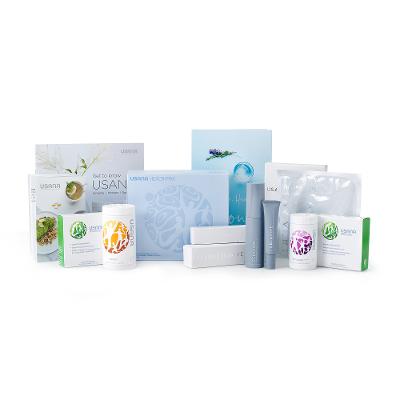
USANA’s RESET Gluten-Free Transform Kit† contains over a month’s supply of everything needed to help transform your body for a healthier, happier you. Following the 5-Day J…umpstart Phase of USANA’s RESET™ weight-management program, the Transform Phase will help you achieve your goal weight. All foods included in this kit are made with a gluten-free, low-glycemic formula, designed to deliver sustained energy and control hunger, giving your body what it needs to lose weight. This program will not only help you shed pounds, it will help you make positive changes to your overall lifestyle and keep weight off for good.*

Health Basics

Helps control hunger and the stress of dieting
Boosts metabolism and helps with energy
Provides gluten-free, balanced nutrition and all you need for weight-loss success
Contains low-glycemic ingredients to control carbohydrate cravings
One of the healthiest and most balanced weight-loss programs in the market

RESET Gluten-Free Transform Kit

USANA® Essentials™ Green
Rev3 Energy Surge Pack (28pk)
Nutrimeal, Chocolate Whey (3)
Nutrimeal, French Vanilla (3)
Peanut Butter Crunch Nutrition Bars (1 box)
Chocolate Fusion Nutrition Bars (1 box)

Order USANA RESET KIT Here

Get Over It: Shin Pain

Exercises and advice to keep your lower legs healthy and strong.

Shin splints are a common beginner’s injury, so many seasoned runners assume they’re immune. But medial tibial stress syndrome, the top cause of shin splints, is usually triggered by overtraining–something that can befall even experienced runners. If you feel soreness or pain along your shinbone while running, check your training log. Chances are you’ve increased your mileage or intensity too much without enough rest. Other causes include running on hard or uneven road surfaces and wearing worn-out shoes. Stretching, strengthening, icing, and replacing shoes are effective rehab strategies (see below). If your pain persists, you might have a stress fracture or compartment syndrome, conditions that require a doctor’s care.

Rehab

At the first sign of discomfort, take a few days off from running. You can cross-train, but stick to low-impact activities like swimming, pool running, or cycling. Take anti-inflammatory medications and rub your shins with ice for 10 minutes after exercise. Replace your running shoes if they’ve logged 300 to 500 miles. Build range of motion in your calves and strengthen your shin muscles. When you return to running, start slowly, gradually increase your miles, and stick to softer surfaces when possible. To prevent a relapse, continue to stretch and strengthen even after your symptoms fade.

Get Flexible

1 Sit tall in a chair with knees bent 90 degrees, feet flat on the ground. Keeping your right heel on the ground, gently raise your right forefoot up and back toward your shin until you reach a point of slight discomfort. Return it to the ground. Repeat 10 times with each foot.

2 From the same position, lift your right forefoot up, and trace the letter “J” in the air with your foot. Return it back to the ground. Repeat 10 times with each foot.

Get Strong

1 Sit tall in a chair with your right leg extended and an ankle weight on your foot. Slowly draw your toes back until you reach a point of slight discomfort. Then extend your toes forward until you feel tension. Repeat 10 times with each foot.

2 On a stair step, stand on the balls of your feet, heels over the edge. Slowly raise your heels, then lower them below the starting position. Repeat 10 times–and do 10 more reps with your toes inward and then outward.

from RunnersWorld.com

Five prerace nutrition mistakes—and how to keep them from ruining your big day

If you’re like many runners, you’ve spent the last few months training for a big race. And as your 5-K, half-marathon, or marathon approaches, you’re probably taking extra care with what you eat and drink. Maybe you’re loading up on carbs, drinking lots of water, ordering extra servings of broccoli and beans. But are you doing the right thing?

“How you fuel up before the race has a huge impact on your performance,” says Beth Jauquet, R.D., a nutritionist for Cherry Creek Nutrition in Denver. Unfortunately, runners tend toward extremes: Skimping on fuel, overdoing food or drink, or eating foods that cause digestive disaster. Here’s how to avoid common mistakes and ensure what you eat and drink in the week before your race will help you secure the PR you hoped for.

The Mistake: Eating a Box of Pasta

Many runners like to top off their glycogen stores by feasting on carbs the night before a race. And why not? You’re going to burn through them the next day. But flooding your system with more carbs than it can process may lead to digestive problems that will have you running to the porta-potty every mile.

The Fix: Consume moderate quantities–not huge portions–of carbs for several days prior. “Massive amounts of any food throw your system a curve ball,” says Jauquet. Have oatmeal for breakfast, potatoes at lunch, and pasta for dinner. “Eat just to fullness, so you don’t get indigestion or have trouble sleeping,” says Tara Gidus, R.D., a spokesperson for the American Dietetic Association.

The Mistake: Drinking Gallons of H20

Not only will chugging too much water before a race leave you feeling bloated, but it will also dilute your electrolytes–minerals responsible for optimum muscle contraction. Diluted electrolyte levels can cause muscle weakness or cramping and, in extreme cases, can lead to hyponatremia, a life-threatening condition triggered by abnormally low sodium levels.

The Fix: In the days leading up to your race, drink fluids as you normally would to stay hydrated. This can include water, sports drink, juice, even coffee and tea. On the morning of the race, Jauquet recommends drinking 16 ounces of water two to three hours before the start, giving your body time to process extra fluid; drink another one to two cups right before the gun goes off.

The Mistake: Loading up on Fiber

Normally, runners should make sure to eat lots of cruciferous vegetables, beans, and whole grains. And if you’re used to such foods, all that roughage right before a race may pose no problems for you. But if you’ve been living on pizza and burgers, now is not the time to become a vegan. Loading up on high-fiber foods can cause uncomfortable gas, especially if your stomach is plagued by prerace jitters.

The Fix: If you think fiber might be an issue, “cut back on those foods three days before a major race,” says Gidus. That includes beans and bran cereals-but not fruits and veggies, which you should eat in modest portions. Think one cup of pineapple, a handful of cherries, or a few broccoli florets. But, Gidus cautions, if you’re racing every weekend, reduce your fiber intake only on race day to make sure you don’t trim all fiber out of your diet.

The Mistake: Skipping Breakfast

Too nervous or worried about feeling full, some runners can’t face food on race morning. But without it, you’re likely to bonk in any race. Why? Because studies show that a prerace meal keeps your blood sugar steady and provides energy to power you through. “There’s no way to get enough fuel midrace to make up for the energy you missed at breakfast,” says Jauquet.

The Fix: If you know you get too nervous to eat before a race, wake up a few hours before the start-so you can eat breakfast slowly, letting each bite settle before taking another. If you can’t stomach solid foods, drink a smoothie with bananas, fruit juice, and milk. These ingredients are easy on most stomachs, provide energy, and won’t leave you feeling overly full.

The Mistake: Trying Something New

If you’ve never had spicy salmon sushi, don’t order it the night before your race. You won’t know how a food affects you until you’ve tried it-and last-minute experimentation could send you bolting for the bathroom and leave you dehydrated.

The Fix: Stick with what you know for a week before race day. Check the race Web site to confirm which drinks and gels (if any) will be offered along the course so you can test them out in advance. Don’t be afraid to skip the prerace dinner or hotel breakfast: If you’re not used to downing sausage burritos prerace, you’re better off sticking with a familiar bowl of pasta. As long as it isn’t huge.

Eat better

In the days before a race, vary your diet with nongrain carb sources, such as fruits and starchy vegetables, to benefit from a wider range of nutrients.

Source: Runnersworld.com

5 simple suggestions to help you create a more complete diet

Spinach has amazing benefits — it can boost your immune system, reduce your risk of cancer, and support your heart.

Yet, eating mounds of spinach alone won’t do you very much good. In order to get the full nutritional value out of food, you have to be sure and eat a wide variety.

A balanced diet is the center of a healthy lifestyle plan. Each food group is important and adds a necessary element to your health.

All balanced diets should contain micronutrients, the vitamins and minerals your body needs, and macronutrients, the protein, healthy fats, and carbohydrates you need to support your muscles, bones, immune system, weight loss, and more.

It may seem complicated, but here are a few simple suggestions to help you create a more complete diet:

  • Strive to eat lean proteins and at least one to two servings of fruits and vegetables with each meal.
  • Try to eat a colorful diet to ensure you are getting a wide variety of fruits and vegetables. Generally, more color means more nutrients.
  • Be sure to pack in plenty of fiber — it adds bulk to your food and helps you feel fuller longer. Fibergy® Plus is a great way to add fiber to your diet.
  • Focus on foods that won’t spike your blood sugar. USANA® Foods, such as Nutrimeal™ or Nutrition Bars™, are a great option as they have been clinically proven to be low glycemic.
  • Add in a high-quality multivitamin/multi-mineral supplement, such as the USANA Essentials™, to ensure your daily nutritional needs are met.

For more tips on balancing your diet, check out this video from USANA’s own Dr. Brian Dixon, director of new product innovations, and John Bosse, senior scientist of product innovation:

Adjust your meal planning to make vegetables, fruits, and lean proteins the staples of your healthy diet and remember to mix it up, keep it colorful, and make low-glycemic choices.

Runners World 2013 BEST BUY: Brooks Ravenna 4

Click image below to Buy Brooks Ravenna 4 from Amazon for best available prices:

The Ravenna 4 proves that you don’t need an oversized, ugly, and expensive shoe in order to get excellent stability. At just 11.1 ounces, the fourth edition of the Ravenna delivers an excellent balance of cushioning and pronation control, at a wallet-friendly price—though it will cost you $10 more than last year’s model. While the midsole and outsole are said to remain unchanged, testing at the RW Shoe Lab revealed that the forefoot is noticeably more flexible in this update. The shoe’s upper saw subtle tweaks to improve the midfoot wrap and adjustability. “The fit of the Ravenna 4 is very similar to the Brooks Adrenaline,” says Nicholas Stanko, of East Lansing. “It has a better fit in the arch.” This is partly because the band that wraps the midfoot has some added elasticity, letting you adjust the tightness.

BOTTOM LINE: For the price, it’s awfully hard to beat this balance of features and ride.

Weight: 11.1 oz (M); 9.3 oz (W)
Height: 35.1 mm (heel); 25.8 mm (forefoot)

“The cushioning on the shoe is great. When I run, even on the hard pavement, my feet land softly and feel great afterward.”—Megan Carnaghi, East Lansing, Michigan

“This is one of my favorite all-around running shoes that I have tried in awhile. The fit is great, I love the style, and I feel amazing running in them. I definitely recommend them!”—Mindy Patnoude, East Lansing, Michigan

“The fit of the shoe was very similar to the Brooks Adrenaline. Better fit in the arch.”—Nicholas Stanko, East Lansing, Michigan


30 Things Every Woman Should Know About Running

Knowledge is power, in running as in any other pursuit. The more you know about training, nutrition and health, the better you’ll be at getting the most from your running, whether that means fitness, weight loss, great race performances or just plain fun. In this article, you’ll find loads of useful information to help you reach your goals.
These facts and tips cover health, psychology, weight loss, pregnancy and motherhood, training, racing and more. Some apply to all runners, but most address the specific needs of women. You may find things you already know, but we’re sure you’ll discover new ideas that can help you to become the runner you want to be.

1. Running is a state of mind. The only thing that determines your success, or lack of success, is the way you think about your running. If it works for you – if it relieves stress, burns calories, gives you time to yourself, enhances your self-esteem – then it doesn’t matter what any other person or any stopwatch says about your running.

2. For female runners, controlled anaerobic training – intervals, hill reps, fartlek training – may lead to gains in strength and speed similar to those produced by steroids, but without the noxious side effects. Why? High-intensity anaerobic running is one of the most potent stimulators of natural human growth hormones – those that contribute to stronger muscles and, ultimately, enhanced performance.

3. Running with headphones outdoors is a safety hazard in more ways than one. You won’t be able to hear cars, cyclists or someone approaching who intends to do you harm. Attackers will always pick a victim who looks vulnerable. When you have headphones on, that means you.

4. Fast running burns more calories than slow running, but slow running burns more calories than just about any other activity. In short, nothing will help you to lose weight, and then keep it off, the way running does.

5. Doctors consider that moderate exercise during a normal pregnancy is completely safe for the baby. Running should cause no problems in the first trimester and it should be fine for most people in the second trimester. Few women would run in their final three months, however. The most important precaution is to avoid getting overheated; a core body temperature above 101°F could increase the risk of birth defects. So make sure you’re staying cool enough, and if in doubt, take your temperature after a run. If it’s over 100°F, you’re probably overdoing it. Also, skip that post-run soak in a hot bath.

6. You don’t have to be the competitive type to enter a race every now and then. You’ll find that lots of other racers aren’t overly competitive, either. They’re out there because it’s fun and social, and it motivates them to keep on running.

7. Women generally have narrower feet than men, so when you’re buying running shoes, your best bet will probably be a pair designed specifically for women. But everyone’s different; if your feet are wide, you may actually feel more comfortable in shoes designed for men. The bottom line: buy the shoe that fits your feet. If there is any question – or if you suffer blisters or injuries because of ill-fitting shoes – consult a podiatrist who specialises in treating runners.

8. An American study found that running women produce a less potent form of oestrogen than their sedentary counterparts. As a result, female runners cut by half their risks of developing breast and uterine cancer, and by two thirds their risk of contracting the form of diabetes that most commonly plagues women.

9. Having another woman or a group of women to run with on a regular basis will help to keep you motivated and ensure your safety. It’s also a lot more fun than running alone. Women runners become more than training partners; they’re confidantes, counsellors and coaches, too.

10. Women who run for weight control may lose perspective on what is an appropriate body size. A recent survey of thousands of women found that while 44 per cent of respondents were overweight, 73 per cent thought they were.

11. Unfortunately, men and women will never be equals in the urination department. Men are in and out of public toilets in a flash, while women stand in long, slow queues. And when it comes to running, men enjoy the ultimate convenience. But a female runner doesn’t have to be a prisoner of her anatomy. Simply find a private place behind a tree or dense shrubbery, squat and pull the lining of your shorts over to one side. Just beware of using unfamiliar leaves as toilet paper.

12. The two minerals that women runners need to pay the most attention to are calcium and iron. (Iron is especially important for menstruating women.) Good sources of calcium are dairy products, dark leafy vegetables, broccoli, canned sardines and salmon, while foods high in iron include liver, fortified dry cereals, beef and spinach.

13. Note: women who train intensively, have been pregnant in the past two years or consume fewer than 2500 calories a day should get more than routine blood tests for iron status, since these test only for anaemia, the final stage of iron deficiency. Instead, ask for more revealing tests, including those for serum ferritin, transferrin saturation and total iron-building capacity.

14. Running with a dog gives you the best of both worlds – you get to run alone, but with a friend. A dog is both a faithful companion who will go anywhere, any time, and a loyal guardian who’ll discourage anyone from harming you. The optimal running dog is medium-sized, with a bloodline bred for endurance. An easy rule of thumb: hunting breeds make the best runners.

15. There’s no need to miss a run or a race just because you’re having your period. If you’re suffering from cramps, running will often alleviate the pain, thanks to the release during exercise of pain-relieving chemicals called endorphins. Speedwork and hill sessions can be especially effective. To guard against leakage, try using a tampon and a towel for extra protection.

16. Running helps to produce healthy skin. According to dermatologists, running stimulates circulation, transports nutrients and flushes out waste products. All of this leads to a reduction in subcutaneous fat, making skin clearer and facial features more distinct.

17. It may not be much consolation, but men are sometimes verbally harassed and occasionally threatened on the run, just as women are. Be sensible when you run, but don’t let insignificant taunting limit your freedom.

18. If you run so much that your periods become light or non-existent, you may be endangering your bones. Amenorrhoea (lack of a monthly period) means that little or no oestrogen, essential for the replacement of bone minerals, is circulating in your body. Amenhorroeic women can stop, but not reverse, the damage by taking oestrogen and getting plenty of calcium. If your periods are infrequent or absent, consult a gynaecologist, preferably one sensitive to the needs of runners.

19. If you were a regular runner before you became pregnant, you might have a bigger baby – good news, since, up to a point, larger infants tend to be stronger and weather physical adversity better. Researchers in the US found that women who burned up to 1000 calories per week through exercise gave birth to babies weighing five per cent more than the offspring of inactive mums. Those who burned 2000 calories per week delivered babies weighing 10 per cent more.

20. Women who run alone should take precautions. Leave a note at home stating when you left, where you’ll be running and when you expect to return. Carry a personal attack alarm. Stick to well-populated areas, and don’t always run the same predictable route. Avoid running at night and don’t wear jewellery. Pay attention to your surroundings. Carry identification, but include only your name and an emergency phone number.

21. No matter what your size, it’s a good idea to wear a sports bra when you run. By controlling breast motion, it will make you feel more comfortable. Look for one that stretches horizontally but not vertically. Most importantly, try before you buy. A sports bra should fit snugly, yet not feel too constrictive. Run or jump on the spot to see if it gives you the support you need.

22. If you ran early in your pregnancy, you might want to try switching to a lower-impact exercise during the latter stages and after delivery. Because of the release of the hormone relaxin during pregnancy, some ligaments and tendons might soften. This will make you more vulnerable to injury, especially around your pelvis. Walking, swimming, stationary cycling and aquarunning (you’ll be even more buoyant than usual) are good choices.

23. Trying to lose fat by eating less and less and running more and more doesn’t work. The more you exercise and the less you eat, the more likely your body is to ‘hibernate’. That is, you’ll conserve calories and thwart your efforts to lose fat. The better bet is to exercise reasonably and increase your food intake early in the day to fuel your training. Eat breakfast, lunch and an afternoon snack. Then eat lightly at dinner and afterwards.

24. Morning is the best time for women to run, for lots of reasons. First, it’s the safest time; statistics show that women are more likely to be attacked late in the day. Second, studies have shown that morning exercisers are more likely to stick with it, because what you do first thing gets done. Third, it saves you a round of dressing, undressing and showering at lunchtime or later. Fourth, it gives you a feeling of accomplishment, which is a great mental and physical start to the day.

25. Exploring your competitive side can offer benefits beyond running. Racing can help you tap into a goal-setting, assertive and self-disciplined side of your personality. Channelled correctly, these attributes can boost your success in other parts of your life, such as in the workplace.

26. ‘That time of the month’ (or even the few days preceding it) is not the time when women run their worst. The hardest time for women to run fast is about a week before menstruation begins (a week after ovulation). That’s when levels of the key hormone progesterone peak, inducing a much-higher-than-normal breathing rate during exercise. The excess ventilation tends to make running feel more difficult.

27. Just because you’re married and have young children and a job doesn’t mean you don’t have time to run. Running is time-efficient and the best stress-reducer on the market. You need this time. Taking it for yourself (by letting your husband baby-sit while you run, for instance) will benefit the whole family.

28. Babies dislike the taste of post- exercise breast milk, which is high in lactic acid and imparts a sour flavour. One study found that nursing mums who logged 35 minutes on the treadmill had to cope with grimacing, reluctant infants if they nursed too soon afterwards. Researchers recommend that you either collect milk for later feeding, or breast-feed before running.

29. Women sweat less than men. However, contrary to popular belief, women dissipate heat as well as men. The reason: women are smaller and have a higher body-surface-to-volume ratio, which means that although their evaporative cooling is less efficient, they need less of it to achieve the same result. Nonetheless, be sure to drink plenty of water (until your urine runs clear) to offset the effects of sweating and prevent dehydration.

30. While no one has ever proved the old theory that women are better marathoners than men (because they have more body fat to burn), you never hear anyone argue the opposite. Men tend to use their strength to push ahead in short races, but this can backfire in a marathon. Women seem perfectly content to find a comfort zone and stay there. This makes them ideally suited for the marathon – the ultimate keep-your-cool and keep-your-pace distance. So why not be bold and set your sights on a marathon?

(Source:runnersworld.co.uk)

Shop all the best top-brand running shoes, apparel & running gear!

Your First Marathon: Words From The Wise

With so much to think about before your first marathon – what to wear, when to eat and how to pace yourself for starters – it’s no wonder your anxiety levels can soar during the build-up to race-day.

Check these fail-safe tips to ensure your marathon debut goes as smoothly as possible.

From bum-bag necessities to perfectly timed pit stops, make sure you’ve every eventuality covered with these handy pointers.

The week before…

■Prepare yourself mentally by rehearsing the last four or five miles in your head. If you can do this on the actual marathon course, so much the better. The advantage is that it becomes so familiar that once you reach this section you will feel that you’re home and dry. – Australopitcheus

■Cut your toenails a good few days prior to the event. That way if you cut them too short and your toes are painful, they have time to heal. – Roobarb

■For two days before the race avoid strong or spicy foods, and, if you can stick to what you have been eating during your training. Stick to carb loaded foods containing nothing acidic in any flavourings you use. – The Swindon One

■Get a good night’s sleep two days before marathon day because it’s quite usual to worry the night before. It’s OK to have a glass of wine or two to settle the nerves without any adverse effects. – Selfish Git!!!

■If you are staying in a hotel away from home – take your pillow with you. It might sound daft and you might feel silly, but you need all the help you can get to sleep the night before the race. – Minnie Two Bikes aka MTB

■The day before the marathon, do nothing. Sit on your bum and watch TV with your feet up eating pasta (preferably cooked by your loved one). Think back over your training and visualise everything going perfectly the next day. – Acoustic Soda

■Don’t try to remember anything that’s written in the pre-race information. If it’s important to you, write it down and take it with you. Your brain will cease to function normally (or maybe that’s just me). – CumbriAndy

Kit Essentials

■Put your name on your vest – I couldn’t work out why everybody else had loads of support in the crowds who knew their name and I didn’t! – FINgers

■Take a loo roll in your kit bag to the Greenwich/Blackheath start area. There is little worse than queuing for the loo for 30 minutes then discovering there is no loo roll to help out with the pre-race nerves! – Pacha

■If it’s raining take a bum-bag. Fill it with the usual goodies, sweets, chocolate, pills etc but also some of those mini-ankle socks. Should you have to stop at 16 miles with blisters, you’ll have some dry socks to put on, rather than wringing out the wet ones. – Iccle Jim

■Pack a blister-plaster pack in your bum-bag, and a hat or bandana. The weather can change a lot in two to six hours and you’ll want to avoid getting a sunburnt/windburnt head. – RFJ

■Don’t wear new shoes. I bought new trainers and ‘saved’ them especially for my big race. Ouch! Blisters and then some. – The one at the back

■SPF cream is my main piece of advice. I wasn’t expecting to get sunburnt on a not-particularly-sunny April day. – Beckylou

■Put Vaseline on anything that might rub against anything else – there are a surprising number of moving parts when you start thinking about it. Good also for exposed flesh if it’s wet and cold – you don’t want chapped lips and raw skin. – Eva Midsole

■Apply a thin layer of Vaseline around your whole foot and between the toes. I didn’t get a single blister. – Tmap

■A couple of plasters over your nipples works heaps better than Vaseline (as long as you are not especially hairy!) – Nick L

■Always carry a spare pair of shoelaces in your bum bag. If you got to the start line, readjusted your shoelaces and one snapped, it could be the difference between starting the race five minutes later, or not at all. – Malcolm Jeffrey

At the Start…

■Be prepared for the mental ‘rush’ of the crowds, the noise, the colour and the excitement. Some runners find it vastly encouraging – first time round it just stunned me. – OuchOuch

■When you get to the start zone, go to the loo. While queuing, get changed, warm up, eat breakfast etc. When you’ve been, join the queue again! You can never go to the loo too many times before the race! – Iccle Jim

■Think about your legs. Keep off your feet as much as possible. Take an old shirt, jacket or bin bag, anything to sit on wherever you can. – Gatton 225

■If you can ‘buddy up’ with someone at your pace it makes a big difference. I’ve now done four marathons and the two where I chattered happily away to someone for the bulk of the race seemed more comfortable. – amadeus

Ready, steady… go

■Start slow. You will feel lousy before the marathon because of tapering, then when you start you’ll suddenly feel wonderful. Your body hasn’t really changed so don’t revise your target pace because you feel good at mile five, or 10 or 15. You can only make a sensible assessment from mile 18 onwards. – Skip

■If you are doing run/walk, do it from the beginning (crowds permitting). – Nessie

■Don’t let the adrenaline take over, even if you’re running at a speed that is slower than you trained at. Overtaking people who have gone out too fast feels fantastic in the last few miles and can give you an energy boost if it starts getting painful towards the end. – Gavo

■Break the race up into manageable chunks. For example, a five-mile run to a Lucozade station, a four-mile run to where your mates are spectating, another mile to a Lucozade station, and so on. When things got really tough I never had more than five miles to run before getting a boost. – 3Legs

■I name each mile after someone I admire. No way am I going to give up in their patch… – Stickless

■If it really starts to fall apart count your footsteps until you have recovered your rhythm. When it gets even tougher pick a landmark ahead and ensure that you run to it. As you get close, choose another target ahead. – Dubai Dave

■If you’re starting to struggle from mile 20 onwards, focusing on catching up or staying with the people in front of you can help keep your mind occupied and maintain your pace. – Newbie 1

■Don’t get too hung up on time. By all means have a time plan, but also have plan B, C to Z for any odd surprises. – Plodding Hippo

Eating and drinking

■If you’re travelling to stay locally overnight before the race, check the hotel you are staying in does early breakfasts, or go prepared by taking your own breakfast with you. – Happycat

■Eat your last food two to three hours before the start of the race. Have your last drink one hour before the race and then go to the loo a couple of times in that last hour. This certainly stops me from needing to make a loo stop during the 26.2 miles. – ICRA

■Familiarise yourself with where the energy drinks stations will be so you won’t need to go further without a drink than expected. – CumbriAndy

■Drink before you start, then be especially wary after 14 miles or so. People get really obsessed about hydration and energy, wrongly believing that ‘the wall’ is essentially a failure to eat enough. Eat if you’re hungry, drink if you’re thirsty. – Tmap

■Stick to what you normally do in training with regards to taking fluids during the race. Just because the FLM give water/energy drinks every mile does not mean you need it every mile. I was very sick at the end of my first FLM from taking on too much liquid. – Pacha

■Work out your refuelling plan and stick to it. For my first marathon I had planned what I would eat and when, then trained to that. On the day, I was past halfway before I remembered my plan. Surprise surprise, by mile 20 I was shot… – amadeus

■I took a drink at every single water station because I’d heard how easy it was to get dehydrated. Consequently, having a bladder the size of a pea, I was desperate for the toilet for the last five miles and being the shy wallflower that I am, wasn’t going to go by the roadside! – Cath.

■Only partially unscrew the lids on the Lucozade – it stops spillages and slows the flow, making it easier to drink. – SMD

■Put your favourite post long-run snack in your bag and eat/drink it as soon as you pick your bag up. You may feel like something savoury after all the energy drinks. The sooner you can replace fluids and refuel the better. – Newbie 1

Cooling down…

■When you are approach the finishing line check who is around you – they are also going to be in your finishing picture that you’ll show your family and friends, so best it doesn’t show you being beaten by someone twice your age or dressed as a Teletubby. – Skip

■Arrange to meet a friend at the end. It can be a nightmare trying to get your stuff. I was eternally grateful to my dad for meeting me at the finish, carrying my stuff, praising me, and driving me home! – The one at the back

■Don’t rely on being able to contact your nearest and dearest by mobile phone after the finish as you might have trouble getting a signal. Arrange to meet at one of the labelled trees in Horseguards Parade instead. Oh, and keep moving, however painful it feels. If you can hobble about a bit, rather than collapse in a heap (even if you go backwards down the stairs to the Underground) you’ll feel much better the next day. – Running Rodent

■If you can, have a cold bath afterwards, it feels horrible but definitely helps with the stiffness. – Newbie 1

■Wear your medal until it annoys people. You’ve earnt it! – Iccle Jim

■It’s OK to cry afterwards, even if you are a bloke. It just means you’ve tried really hard and suffered great mental and physical stress in trying to achieve your target – Poacher

(source: runnersworld.co.uk)

Shop all the best top-brand running shoes, apparel & running gear!